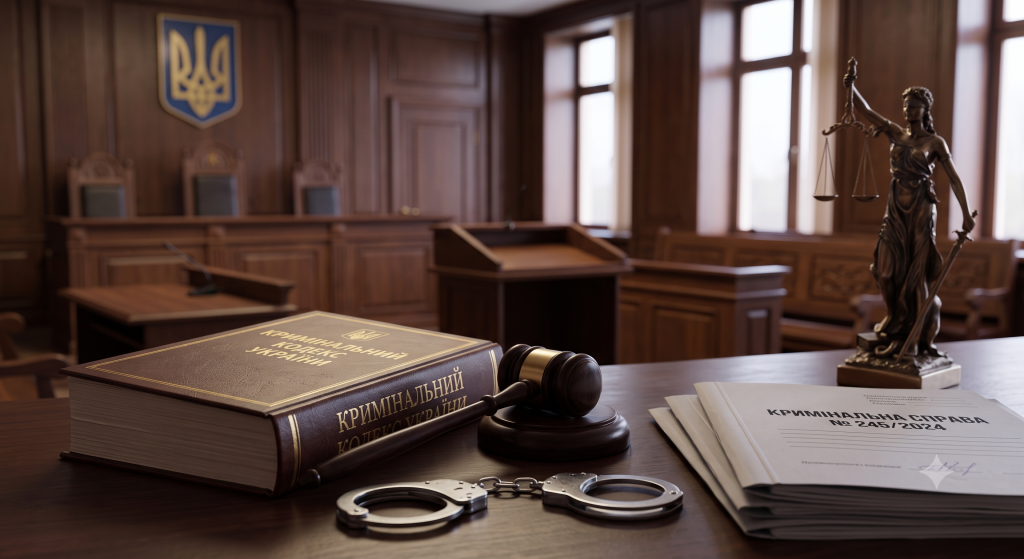
Forgery of documents is not only a story about a fake passport or certificate. In business, it is: a fake act of work performed, a contract, a power of attorney or a bank guarantee. Such documents can disrupt a tender, block payments or become grounds for criminal prosecution. This is a typical scenario. Because forgery of documents is not always about scams, sometimes it is about negligence. But the responsibility is equally serious.
What documents are most often forged?
The most common are deeds, powers of attorney, contracts, bank guarantees, certificates. In the public sector, they are certificates, orders, and letters with wet seals.
Classics of the genre: “the manager signed because the director was on vacation,” or “they asked urgently so that the tender wouldn’t fall through.”
What is the responsibility for?
The Criminal Code (Article 358) provides:
- part 1— forgery or use of a forged document — fine (850-1700 UAH), or imprisonment for up to 2 years;
- h.2 – forgery committed by a private entrepreneur, auditor, expert, specialist, appraiser, lawyer, notary, state registrar, subject of state registration of rights, a person authorized to perform state functions regarding the registration of legal entities, individual entrepreneurs and public formations, a state executor, a private executor or another person carrying out professional activities related to the provision of public or administrative services, of knowingly forged official documents that certify certain facts that have legal significance or grant certain rights or exempt from obligations,
- part 3, 4— using a knowingly false document — the same, but often limited to fines; a fine (850-3400 UAH), or imprisonment for up to 3 years;
Maximum punishment — up to 5 years imprisonment.
📌 Якщо документ підробив посадовець — підключаються ще й ст. 364, 366 ККУ (зловживання владою, службове підроблення). Тут уже можливий реальний строк.
What does it look like in practice?
🔹 Act “from the air”
The construction company filed a lawsuit against the customer demanding payment of over UAH 2 million for the work performed. The lawsuit was accompanied by a handover certificate, allegedly signed by a representative of the customer.
But in court it turned out that the signature belonged to a security guard who had already been fired. This was established through handwriting examination. The company employee explained that “the director didn’t have time, so they signed it themselves, because the work was really being done.”
📌 Наслідки: кримінальне провадження за ст. 358 КК (підробка документа); цивільну справу суд зупинив до завершення досудового розслідування; замовник розірвав усі інші контракти з цією компанією.
🔹 Fake bank statement
The company submitted a tender with a package of documents, including a bank statement stating that it had UAH 5 million in its account. Everything looked perfect: details, logo, and seal.
But the customer checked the document - the bank officially confirmed that it did not issue the certificate. The company explained: the certificate was prepared by a “tender manager” who “made a mistake.”
📌 Наслідки: виключення з участі в публічній закупівлі; повідомлення в поліцію — відкрито провадження за використання підробленого документа; інші тендери фірми — під пильною увагою ДАСУ та слідства.
How to recognize a fake in time?
Document forgery rarely looks obvious. Often it is a document with a real logo, the correct form, even a wet seal. That is why it is important to have a clear verification algorithm - especially in companies that work with a large volume of documentation or participate in procurement.
Here are practical steps that will help you avoid buying a fake:
- Checking document details
- What to check:EDRPOU, tax numbers, addresses, KVEDs, bank details, date of issue.
- How to check:use open registries — YouControl, ua, tax website.
- What to pay attention to:address mismatch, absence of the company in the register, irrelevant data specified (for example, an old address or an already excluded KVED).
📌 Example from practice: The company submitted a certificate of account opening, which indicated the Unified State Register of Accounts of another legal entity. Formally, it is a trifle, but in fact, it is proof of forgery.
- Signatory authority assessment
- What to check:whether the person has the right to sign the document on behalf of this company.
- How to check:Request or independently check in open sources: appointment order, power of attorney, information in the Unified State Register (manager, signatory).
- What to pay attention to:signature of the “development manager” without a power of attorney, signature of the accountant on the certificates of work performed, third-party names.
📌 Advice: In agreements with counterparties, always include an extract from the Unified State Register, which shows who the manager is and whether he has the right to act without a power of attorney.
- Verification through a third party (counterparty or institution)
- What to check:whether the document was actually issued by the party indicated.
- How to check:send an official request (even electronic) to a bank, government agency, or company.
- What to pay attention to:delay in responding, refusal to confirm the document or direct denial of the fact of issuance.
📌 Please note: The trick of some scammers is to create documents “on behalf of” real companies that don’t even suspect that their details are being used.
- Verification of seals and signatures
- What to check:authenticity of the seal, signature, their placement on the document.
- How to check:
- check with archival copies of previously issued documents;
- if necessary, initiate handwriting expertise (especially in litigation).
- What to pay attention to:“Photoshopped” seal, scanned copy of the signature, not a handwritten signature, no traces of pen pressure.
📌 Why is it important: In court, a copy with an unclear signature or seal usually raises doubts about its authenticity - so even banal "blurring" can be grounds for an examination.
To avoid risks fromCheck documents before signing. Do not allow signing of powers of attorney “just in case”. Explain to the staff: “forgery” is not a trifle, but an article of the Criminal Code. Check who you are signing with – sometimes the “supplier company” exists only on paper.